Everyday fitness / 3 min read
How to Spot Someone Safely at the Gym
A good spot starts with agreement: know what lift your partner is doing, what help they want, and when to step in. For barbell bench presses, coordinate the handoff and assistance before the set; for other lifts,…
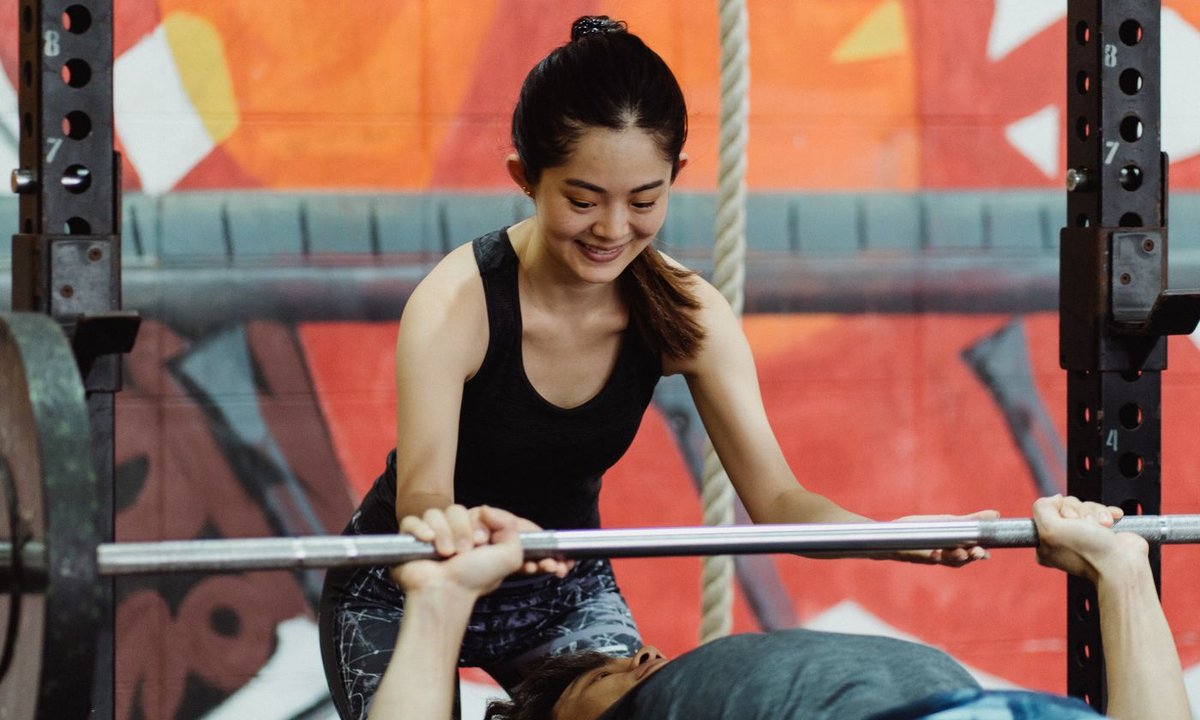
Learn the spotting technique for the specific exercise from qualified gym staff before taking responsibility for a lift. Agree on the handoff, assistance cues, and manageable load, and use suitable safety equipment. Stay attentive and be ready to help if the lifter loses control; an agreed verbal cue must not delay an urgent response. This checklist covers communication, alongside in-person technique instruction.
Agree on the plan before the lift
Ask, “Would you like a spot?” If they say yes, confirm the exercise, the number of reps they’re aiming for, and what counts as a cue to help. Ask whether they want help only if the bar stalls or also with the handoff. Agree on a simple signal, such as “take it,” so neither person has to guess.
For a barbell bench press, check that the plates are secured and the rack is set up as the lifter intends. Use the ready position you have learned for that lift and stay close enough to assist promptly. If you’re not confident you can help control the load, say so and suggest a lighter weight, safety arms set appropriately, or assistance from gym staff. A spotter is not a substitute for suitable equipment or a manageable load.
As a practical suggestion, keep the interaction brief and specific: “I’ll help with the handoff, then assist if you say ‘take it,’ the bar stalls, or you lose control.” This makes your role clear without distracting the lifter.
During the rep, help only as agreed
Watch the bar and the lifter, not your phone. Assist on the agreed cue or promptly if the lifter loses control or cannot complete the movement safely. Help regain control and re-rack together using the lift-specific technique you have learned. Avoid sudden, uneven pulling, and never add resistance during a rep. Once the bar is safely racked, decide together whether to stop.
Spotting methods vary by exercise. Don’t assume the bench-press approach applies to squats, overhead presses, or dumbbell lifts; positioning and safe ways to assist differ. If you haven’t been shown how to spot that specific movement, be honest and get a qualified staff member. If either person feels uncertain, end the set safely rather than improvising.
Research is narrower than gym lore: one small study of 12 recreationally trained adults found that spotter presence was associated with more bench-press repetitions at 60% of one-repetition maximum in that experiment. It did not establish that a spotter prevents injuries or that every lifter should train to failure. (pubmed.ncbi.nlm.nih.gov)
Example: a first-time bench-press spot
A gym-goer asks for help with a barbell bench press. You ask, “Do you want a handoff? What should I do if it stalls?” They answer, “Help with the handoff, then help if I say ‘take it,’ the bar stalls, or I lose control.” You repeat the plan and stay attentive and ready to assist; do not wait for a verbal cue in an urgent loss of control. After the set, you confirm the bar is racked before stepping away.
If you’re looking for a platonic nearby workout partner to practice clear gym communication with, Actively connects adults through activity interests, mutual matching, and chat. Matching with someone doesn’t replace learning a lift-specific spotting technique.
Sources & further reading
- Presence of Spotters Improves Bench Press Performance: A Deception StudyChecked October 29, 2026
Prepared with AI assistance by Actively Editorial. Read our sourcing and corrections policy. General educational information; individual needs vary.