Workouts / 3 min read
A Simple Kettlebell Session Without Complicated Combinations
A straightforward kettlebell workout can be a few separate movements—not a fast sequence to memorize. Try a squat, floor press, supported row, and deadlift for two or three rounds, using a weight you can control and…
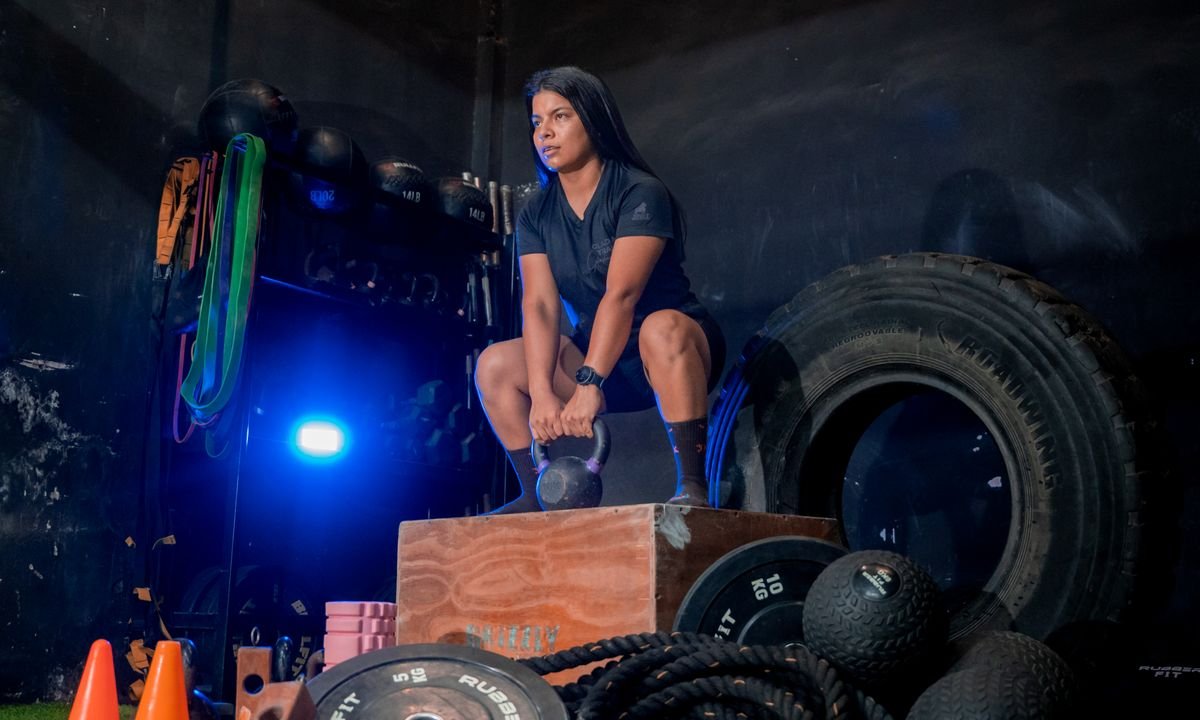
A straightforward kettlebell workout doesn’t need swings, snatches, or a sequence of moves. Choose a squat, a push, a pull, and a hip hinge; do each as a separate exercise for two or three rounds. This practical session suits generally healthy adults who can exercise comfortably. Start with a light bell, clear the area around you, and stop if you feel sharp pain or cannot control a repetition.
The simple session
If you’re new to kettlebells, use these controlled exercises rather than ballistic swings. The sets and repetitions below are practical starting suggestions, not a research-tested prescription.
| Exercise | Starting dose | Simple cue |
|---|---|---|
| Goblet squat | 2–3 sets of 8–10 | Hold the bell close to your chest; squat only as low as you can stay balanced. |
| Kettlebell floor press | 2–3 sets of 8–10 per side | Lie on the floor and press one bell up; keep your wrist stacked over your elbow. |
| Supported one-arm row | 2–3 sets of 8–12 per side | Brace one hand on a sturdy support and draw the bell toward your hip. |
| Kettlebell deadlift | 2–3 sets of 8–10 | Place the bell between your feet; push your hips back, then stand tall. |
Take about 60–120 seconds between sets, or longer if you need it to keep your form steady. You can finish all sets of one exercise before moving on; there’s no need to rush through these as a circuit. If the bell feels awkward or you have to twist, shorten the range or choose a lighter one. A simple session can be repeated on two nonconsecutive days in a week, leaving room for other activity. CDC guidance recommends adults do muscle-strengthening activity on at least two days each week. (cdc.gov)
Make the weight and movements manageable
Pick a bell that lets you complete the listed repetitions without swinging, rushing, or losing your balance. End each set while you could still do a couple of controlled repetitions. If you can’t, reduce the weight or reps. If you cannot safely set up a floor press or a supported row, ask gym staff about a suitable alternative or omit that exercise for today. Avoid improvising an unstable support.
For the deadlift, begin with the bell on a stable raised surface if reaching the floor makes you round your back or lose control. For the squat, practice without holding a bell—or use a stable chair as a depth target—until the movement feels steady. These are practical modifications, not claims that one variation is best for everyone. A review of kettlebell training describes varied exercise uses and notes that more research is needed to understand some of its demands; it doesn’t establish this particular routine as superior to other strength training. (pubmed.ncbi.nlm.nih.gov)
Keep progression boring—in a good way
Write down the bell weight and reps, then repeat the same movements next session. When you can complete the top of the rep range in every set with controlled form, consider adding a small amount of weight or one repetition per set—not both at once. If a new exercise feels unfamiliar, get in-person instruction before adding speed or load.
Prefer training with company? Actively is a platonic app for adults to find nearby workout partners and active friends through shared interests, mutual matching, and chat; it can help you find a training companion, but it doesn’t provide coaching or track workouts.
Sources & further reading
- CDC: Adult Activity — An OverviewChecked October 24, 2026
- Kettlebell training in clinical practice: a scoping review - PubMedChecked October 29, 2026
Prepared with AI assistance by Actively Editorial. Read our sourcing and corrections policy. General educational information; individual needs vary.