Workouts / 3 min read
A Cable-Machine Workout When the Free-Weight Area Is Busy
A practical full-body cable workout that uses one station, simple attachments, and clear alternatives when the gym is crowded.
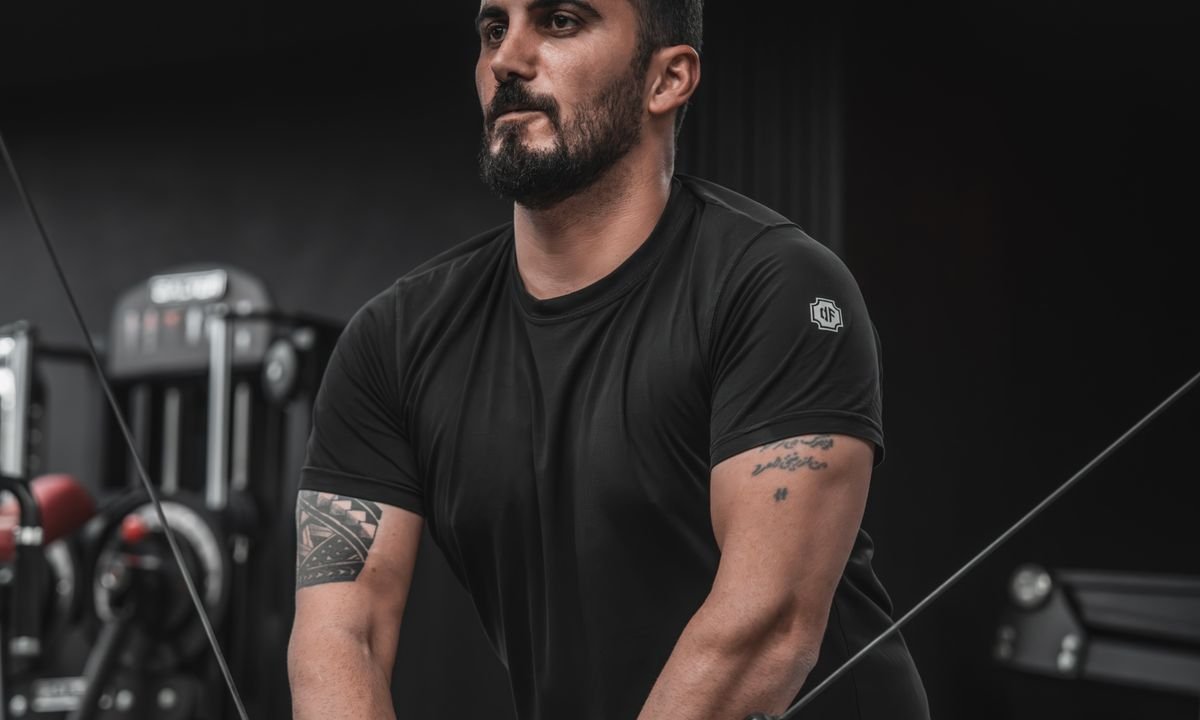
A cable station can cover a useful full-body workout while the dumbbell racks and benches are taken. Pick a cable row, chest press, squat, hip hinge, and optional arm exercise; use a load you can control and leave room for others to work. The plan below takes about 30–45 minutes, depending on rest and how busy the station is. It’s a practical template, not a claim that cables are better than free weights.
Set up without monopolizing the station
Choose a cable station with a high, middle, or low pulley, and check that its attachments are available before you start. If someone is using the station, ask whether you can alternate sets; if not, choose another movement or wait rather than claiming multiple stations. Keep your bag and water bottle out of the walkway.
Do a few easy repetitions of your first exercise before choosing your working load. For each set, use a range of motion you can control without leaning, twisting, or letting the weight stack slam. A cable-machine study found that muscle activity and joint movement can vary between cable and selectorized machines performing similar exercises; that’s a reason to treat equipment as a practical option, not evidence that one is universally superior. Study abstract, PubMed.
The workout: five movements, one station
Complete 2–3 sets of 8–12 repetitions per exercise. Rest long enough to feel ready to perform the next set with steady technique; if the station is busy, keep your rest area clear and let another person work in. The set and rep prescription is a practical starting point, not a research-derived rule for every person or goal.
| Movement | Pulley / attachment | Quick setup cue |
|---|---|---|
| Cable squat | Low pulley; handle | Face the stack, hold the handle in front of your chest, and squat within a comfortable range. Ask gym staff to demonstrate the setup if it is new to you. |
| Standing chest press | Pulley around chest height; handles | Face away from the stack; press forward without arching your back. |
| Seated or standing row | Low or mid pulley; handle | Pull toward your lower ribs; avoid shrugging or rocking to move the load. |
| Cable hip hinge | Low pulley; rope or handle | Face the stack, step back to create tension, and push your hips back while keeping the handle close. |
| Face pull or triceps pressdown | High pulley; rope | Choose one if you have time; use a load that lets you move smoothly. |
For a quicker session, do two sets of the first four movements and skip the optional fifth. If a required pulley is occupied, ask to alternate sets or choose an available squat or hip-hinge variation you already know. A cable pull-through is a hip-hinge exercise; keep a separate squat movement in this example rather than treating the two as interchangeable.
Adjust the plan to your day
Start lighter than you think you need if a movement is new. When you finish a set and could comfortably do several more repetitions, add a small amount next time; if you have to jerk the handle or lose your position, reduce the load. Stop for sharp or unusual pain and seek qualified guidance if you’re unsure whether a movement is appropriate for you.
The 2026 American College of Sports Medicine guidance emphasizes tailoring resistance training to the person and goal; no single equipment style is required for everyone. ACSM overview. If finding a workout partner would make busy gym visits easier, Actively helps adults connect with nearby people through activity interests, mutual matching, and chat; it doesn’t provide coaching or workout logging.
Sources & further reading
- ACSM Publishes Updated Resistance Training GuidelinesChecked October 29, 2026
- Differences in Muscle Activation and Kinematics Between Cable-Based and Selectorized Weight TrainingChecked October 29, 2026
Prepared with AI assistance by Actively Editorial. Read our sourcing and corrections policy. General educational information; individual needs vary.