Workouts / 3 min read
How to Plan a Chest Workout Without Repeating the Same Movement
Build a chest session around distinct movement patterns, not a pile of similar press variations. Choose one main press, one press with a meaningfully different angle or setup, and—if useful—a fly or push-up…
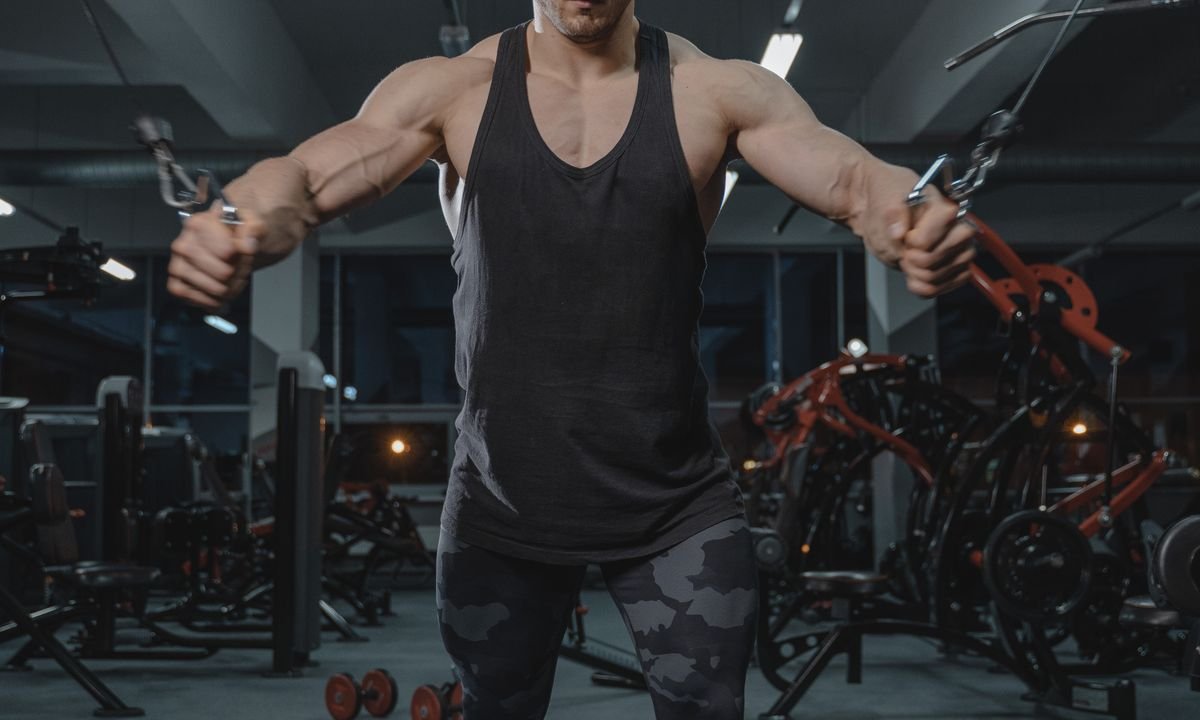
To avoid repeating the same chest movement, choose one main press, then consider an angled press or a fly only if it serves your plan. A barbell press, flat dumbbell press, and flat machine press are all horizontal presses, so changing equipment alone does not create a different movement pattern. You do not need every option in one session.
Sort exercises by what they do
A chest workout can feel repetitive even when the equipment changes. Barbell bench press, dumbbell bench press, and machine chest press are different exercises, but all are broadly horizontal presses. Doing several in one session may add work without adding much movement variety.
Instead, sort choices into simple categories:
- Horizontal press: flat barbell or dumbbell press, machine chest press, or push-up.
- Angled press: incline dumbbell or barbell press.
- Chest isolation: cable or dumbbell fly, where the arms move across the body with a slight elbow bend.
These categories are a planning tool, not a claim that every category is essential. Research measuring muscle activity found that changing bench angle can change pectoral and shoulder activation; that does not by itself prove one angle produces better long-term results. Use angle as one possible way to make an exercise distinct, not as a magic targeting trick. PubMed study on bench angle and muscle activation
Build the session with a purpose for each slot
For a practical chest-focused session, pick two or three exercises that differ in angle, resistance setup, or movement pattern. For example:
| Slot | Example | Why it earns a place |
|---|---|---|
| Main press | Flat dumbbell press | Your primary horizontal press |
| Different press | Incline machine press | Adds an angled press and a stable setup |
| Optional finisher | Cable fly | Provides a chest-focused movement without another press |
The set and rep amounts below are a practical starting suggestion, not a research prescription: try 3 sets of 6–10 repetitions for the main press, 2–3 sets of 8–12 for the incline press, and 2 sets of 10–15 for the cable fly. Choose loads that let you use controlled technique, and adjust the session to your training experience and recovery. If you prefer push-ups, use them in the horizontal-press slot; don’t automatically add them on top of several presses.
Use a quick overlap check
Before you start, ask: Would I describe these two exercises the same way? If both are flat presses, consider an incline press or a fly if you want a different movement—or keep one flat press and remove the extra exercise. A regular push-up also belongs in the horizontal-press category. Also consider what you can perform comfortably and progress consistently; novelty alone is not a reason to swap movements every workout.
A study comparing push-ups and bench presses in trained men found similar muscle activation under the tested conditions. That narrow result doesn’t establish that the movements are interchangeable for everyone, but it supports treating push-ups as a plausible pressing option rather than a completely unrelated chest exercise. PubMed comparison of push-ups and bench press
If variety helps you show up, arrange a session with a friend and take turns at different stations; Actively helps adults find nearby workout partners and active friends. Keep the plan simple: one main press, one genuinely different choice, and an optional third movement—not three names for the same pattern.
Sources & further reading
- Influence of bench angle on upper extremity muscular activation during bench press exerciseChecked October 29, 2026
- Comparison of Kinematics and Muscle Activation between Push-up and Bench PressChecked October 29, 2026
Prepared with AI assistance by Actively Editorial. Read our sourcing and corrections policy. General educational information; individual needs vary.