Quick answers / 3 min read
What Does Progressive Overload Actually Mean?
Progressive overload means gradually increasing the challenge of an exercise as you adapt. You can do that by adding weight, repetitions, sets, or range of motion—but progress should be manageable and appropriate to…
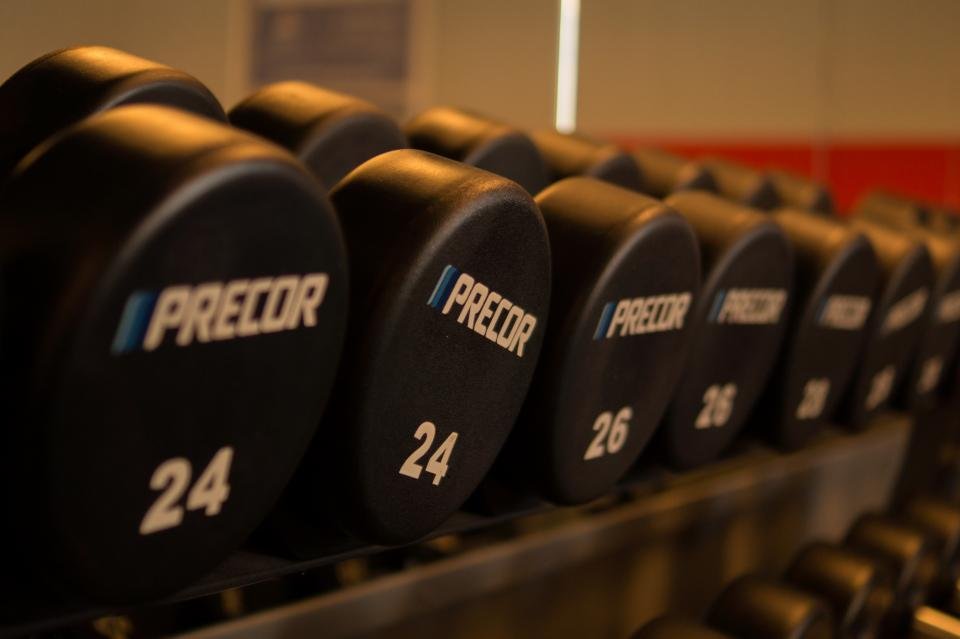
Progressive overload is the gradual increase of training demand over time so your body has a reason to keep adapting. In strength training, that might mean lifting a heavier weight or completing more repetitions with the same weight. It does not mean pushing harder every session, adding weight at any cost, or treating every workout as a test. The right progression depends on your goal, experience, and capacity. The American College of Sports Medicine’s 2026 review discusses progression as one part of resistance-training prescription for healthy adults. ACSM position stand
What can you progress?
For a given exercise, you can gradually increase one training variable while keeping the movement consistent enough to compare sessions. Common options include:
- Load: Use more weight for the same repetitions and sets.
- Repetitions: Complete more reps with the same weight and sets.
- Sets: Add a set, if you can recover from the extra work.
- Movement quality or range: Use a controlled, fuller range of motion when appropriate; this can make a rep more demanding without adding weight.
Those are practical ways to apply the principle, not a requirement to change all the variables. The ACSM review considers resistance-training prescriptions across multiple variables, rather than suggesting one progression method suits everyone. ACSM position stand
A simple example: dumbbell bench press
Suppose an adult does 3 sets of 8 reps with 20-pound dumbbells. A practical approach is to keep that weight and aim to complete a few more clean reps across the sets over later sessions. Once the person can do 3 sets of 10 reps with controlled technique, they could try the next available dumbbell weight and build reps again. The precise rep target and increase are suggestions, not a research-mandated formula; dumbbell increments and individual ability vary.
| Session | Example workload |
|---|---|
| Starting point | 3 × 8 reps at 20 lb per dumbbell |
| Build gradually | 3 × 9, then 3 × 10 at 20 lb |
| Next step | Increase weight modestly and work back up from 8 reps |
If the heavier dumbbells cause shortened range, bouncing, or loss of control, stay with the lighter pair and continue building consistent reps instead. That’s a practical quality check—not a claim that one set of progression rules works for every lifter.
What progressive overload is not
It is not a demand to increase weight every workout. A workout may repeat the same load while you practise, regain confidence, or manage fatigue. Nor is a heavier number automatically progress if the movement changes substantially. For recreational adults, a useful rule of thumb is to change one thing at a time, keep the exercise comparable, and progress when the current workload feels repeatable with good control. This is practical guidance, not a direct finding from a single study.
If you prefer company while building a consistent routine, Actively helps adults connect with nearby workout partners and active friends through interests, mutual matching, and chat. It doesn’t provide coaching or workout logging, so you can decide and track your own training approach.
Sources & further reading
- American College of Sports Medicine Position Stand: Resistance Training Prescription for Muscle Function, Hypertrophy, and Physical Performance in Healthy Adults: An Overview of ReviewsChecked October 24, 2026
Prepared with AI assistance by Actively Editorial. Read our sourcing and corrections policy. General educational information; individual needs vary.