Workouts / 3 min read
How to Practice Your First Pull-Up With Assisted Variations
Build toward your first pull-up by practicing controlled pulling with enough assistance to complete good repetitions. Choose a band, assisted-pull-up machine, or feet-supported row; train two or three times a week,…
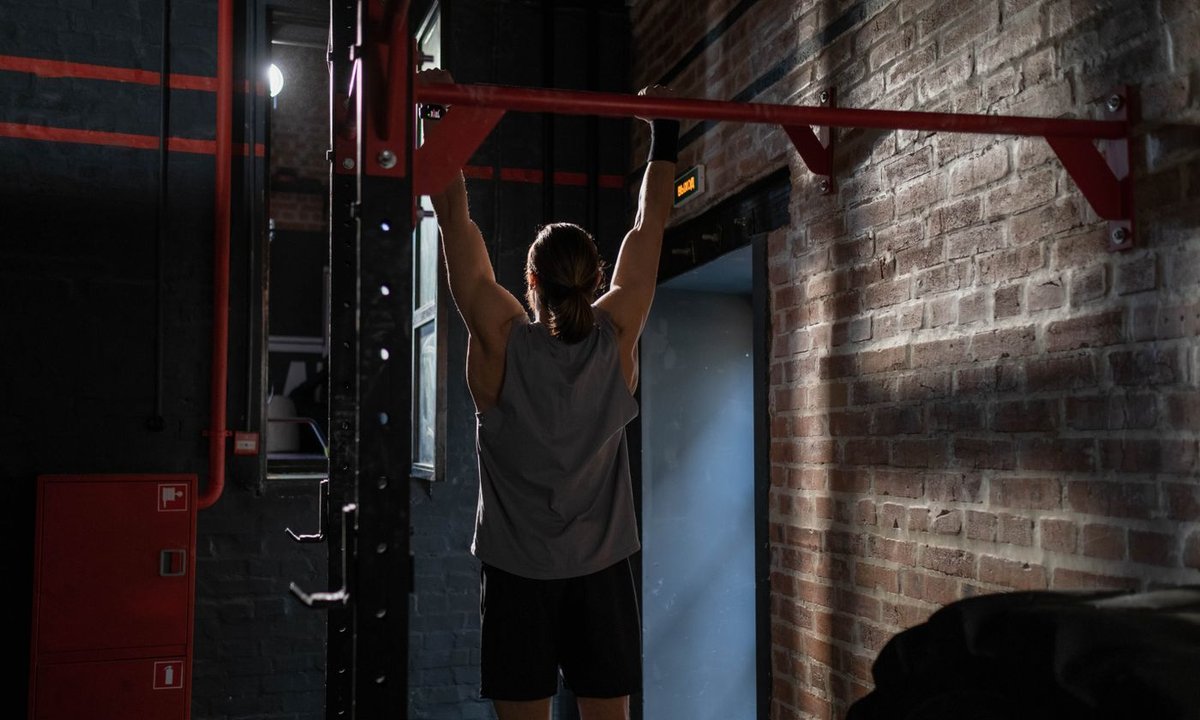
To practice your first pull-up, choose an assisted variation that lets you move smoothly through a comfortable range without swinging or straining. A band or assisted-pull-up machine can help you rehearse the vertical pulling motion; a feet-supported row is a useful alternative if hanging from a bar is uncomfortable. Start with a few manageable sets, leave a little effort in reserve, and gradually use less assistance as your control improves.
Choose an assistance that fits
Assisted-pull-up machine: Set the counterweight so you can pull your chest toward the bar without kicking or shrugging. On most machines, more counterweight means more assistance. Check the machine’s setup instructions before using it.
Resistance band: Secure a pull-up band to the bar as directed by its manufacturer, then place a knee or foot in the loop. A thicker or more supportive band generally makes the movement easier, but bands can shift or snap back, so inspect the band and anchor it carefully. Step down under control rather than dropping from the bar.
Feet-supported row: Use a low bar or suspension trainer and keep your feet on the floor. The more upright your body, the easier the row; walk your feet forward or lower your body to make it harder. This builds pulling practice without needing to support your full body weight from a high bar.
Choose the version that lets you keep a steady body position and lower yourself under control. If hanging causes pain, stop rather than pushing through it; try a feet-supported row or ask a qualified professional about suitable options.
A simple practice session
Try this two or three times per week, leaving at least a day between sessions:
- Do 2–3 easy sets of 6–10 feet-supported rows or light band pull-downs to warm up.
- Practice 3 sets of 3–6 assisted pull-ups. Rest until your breathing is comfortable and you feel ready for another controlled set.
- Finish with 2 sets of 6–10 rows if you still feel fresh.
These set and repetition ranges are practical starting suggestions, not a proven formula for earning a first pull-up. Stop each set while you can still maintain control. Start each repetition with a stable hang or supported start, draw your shoulders down, and pull without kicking. Lower smoothly; don’t drop into the bottom position.
A small study of physically inactive men used assisted pull-ups, rows, and other variations in a twice-weekly, eight-week program. That gives an example of these movements being practiced together, but it does not establish one best routine for everyone or guarantee a first pull-up. (pmc.ncbi.nlm.nih.gov)
Progress without guessing
Keep the exercise and setup consistent so you can compare sessions. When you complete all your planned repetitions with steady form for two sessions, make one small change: reduce the machine’s counterweight, use a less supportive band, or make your row slightly more horizontal. If that change makes you swing or shortens the movement, return to the previous level and build more controlled repetitions first.
For example, if you can do 3 sets of 5 band-assisted repetitions without kicking, try a slightly thinner band next time. Record the band or machine setting and your repetitions in a notebook. Test an unassisted pull-up occasionally when you’re rested—not repeatedly during every session. If finding a workout partner helps you show up for practice, Actively is a platonic app for adults to meet nearby active friends and workout partners.
Sources & further reading
- Comparative Effects of Core Versus Forearm Training on Pull-Up Repetition Performance in Physically Inactive MalesChecked October 29, 2026
Prepared with AI assistance by Actively Editorial. Read our sourcing and corrections policy. General educational information; individual needs vary.