Training splits / 3 min read
How to Organize a Five-Day Push/Pull/Legs and Upper/Lower Week
A five-day push/pull/legs plus upper/lower hybrid can give each major muscle group two training opportunities across the week. Put rest days where they help you recover, keep the upper/lower sessions from simply…
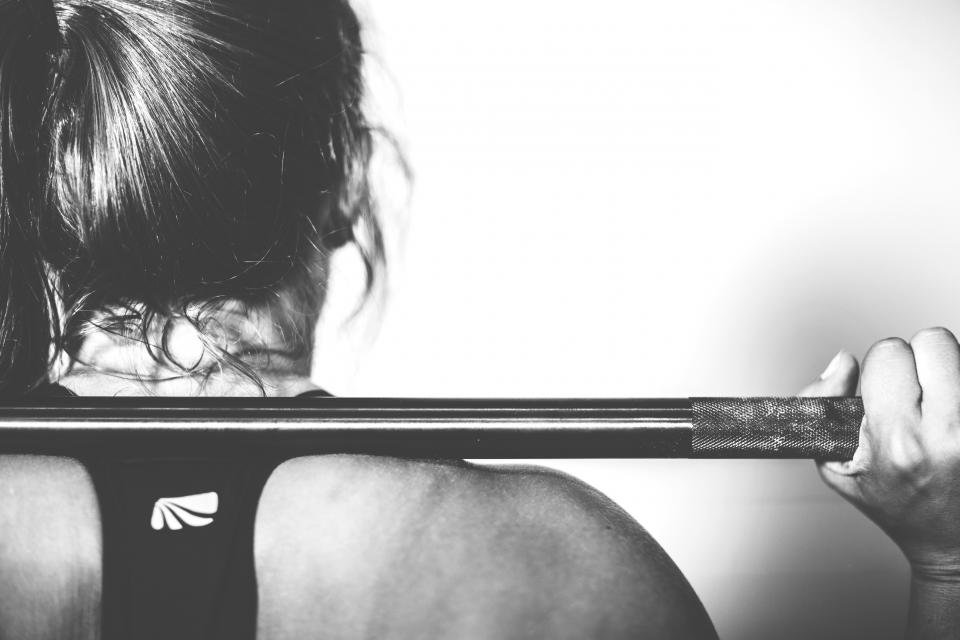
A practical five-day hybrid is push, pull, legs, rest, upper, lower, rest. The first three sessions emphasize a movement pattern; upper and lower days provide a second, balanced exposure to those muscles. This is a flexible template—not a research-proven superior split. A review found that when weekly training volume is equated, training frequency does not meaningfully change muscle growth, so choose a schedule you can recover from and follow consistently. Research review on training frequency
Example weekly schedule
| Day | Focus | Example exercises |
|---|---|---|
| Monday | Push | Bench press, overhead press, incline dumbbell press, lateral raise, triceps pressdown |
| Tuesday | Pull | Pulldown or pull-up, chest-supported row, rear-delt fly, biceps curl |
| Wednesday | Legs | Squat or leg press, Romanian deadlift, leg curl, calf raise |
| Thursday | Rest | Full rest or easy activity |
| Friday | Upper | Incline press, cable row, machine chest press, pulldown, lateral raise, curl or triceps extension |
| Saturday | Lower | Deadlift variation or hip thrust, split squat, leg extension, leg curl, calf raise |
| Sunday | Rest | Rest |
This is an example for generally healthy adults who already know how to perform the exercises safely. Start with 2–3 working sets per exercise; choose loads that let you complete roughly 6–12 controlled repetitions for most lifts, while smaller isolation exercises can use higher repetitions. These are practical starting suggestions, not a prescription or a claim that one rep range is uniquely best. Reduce sets or exercise overlap if performance or recovery suffers.
Make the two exposures work together
Avoid making Friday and Saturday copies of Monday and Wednesday. If Monday’s push session is bench-press focused, Friday can use an incline press and a row-focused upper session. If Wednesday includes a squat, Saturday can emphasize a hip hinge or single-leg movement. The goal is to distribute work—not cram every exercise into every session. Rest between hard sets long enough to perform the next set with good technique; a small trial in trained men found benefits from longer rest periods compared with one-minute rests, but it does not establish one ideal rest time for everyone. Study of rest intervals
If five days in a row is your only option, this arrangement gives you three consecutive sessions followed by a break, then two more. If that still feels too compressed, spread the sessions across more calendar days, such as Monday, Tuesday, Thursday, Friday, and Sunday. Missing a day? Resume with the next session rather than doubling workouts to “catch up.”
Keep the plan social and sustainable
Use the exercise list as a menu: gym equipment, experience, and preferences may call for substitutions. If you’d enjoy having a workout partner for one of these sessions, Actively helps adults find nearby workout partners and active friends through shared interests, mutual matching, and chat. It can support the social side of showing up; it is not a training plan or workout tracker.
Evidence versus application: The cited review informs the point that frequency alone is not a guaranteed muscle-growth advantage when volume is matched. The five-day layout, exercise examples, and progression approach above are practical programming suggestions; individual needs and schedules vary.
Sources & further reading
- How many times per week should a muscle be trained to maximize muscle hypertrophy? A systematic review and meta-analysisChecked October 24, 2026
- Longer Interset Rest Periods Enhance Muscle Strength and Hypertrophy in Resistance-Trained MenChecked October 24, 2026
Prepared with AI assistance by Actively Editorial. Read our sourcing and corrections policy. General educational information; individual needs vary.