Quick answers / 3 min read
Does exercise order matter in a strength workout?
Yes—mainly for which exercises get your best effort. Put the movements or muscle groups you most want to improve earlier, when you are fresher. Research suggests exercise order can affect strength gains in the…
What the research says
A systematic review and meta-analysis of resistance-training studies found that strength gains tended to favor exercises placed earlier in a workout: starting with multi-joint exercises favored strength gains in those movements, while starting with single-joint exercises favored strength gains in those movements. The review found no clear difference in muscle growth based on whether multi-joint or single-joint exercises came first. These findings describe patterns across the included studies; they do not guarantee the same result for every person or program. (Nunes et al., 2020)
In practice, treat the first few exercises as your priority slots. Fatigue from earlier work may make it harder to perform later exercises with the same load, repetitions, or focus. So if improving your squat is the goal, doing several demanding leg exercises first may work against that goal—even if the workout still feels productive.
Choose an order that matches your goal
| If your priority is… | Try putting this first |
|---|---|
| Getting stronger at the squat | Squat, after warming up |
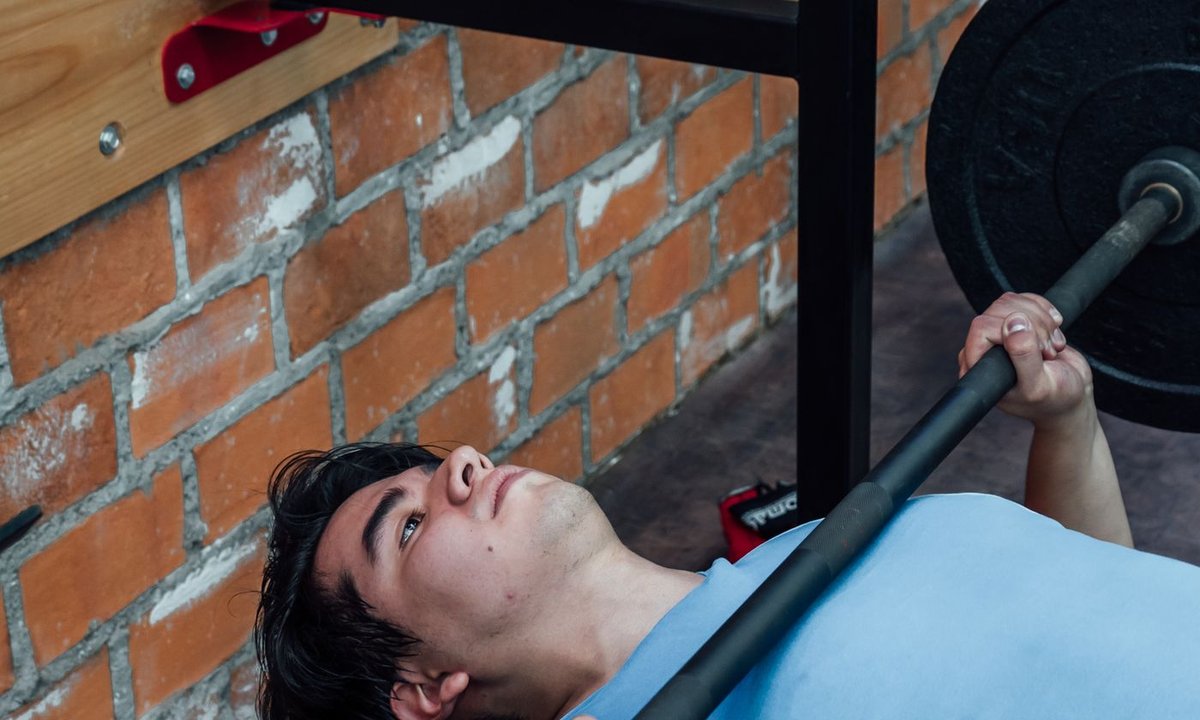
| Improving a particular lift, such as the bench press | Bench press, after warming up |
| Bringing up a smaller muscle or lift | Its single-joint exercise, such as a triceps extension, earlier in the session |
| General muscle growth | A major exercise for a target muscle, then supporting exercises; adjust if later work consistently suffers |
These are practical starting points, not a required template. The research supports prioritizing the exercise you want to improve; it does not establish one perfect sequence for every workout. For strength, use the variation you actually want to get better at—not just a movement that seems more complex. For general training, a common workable order is: priority lift, other demanding multi-joint movements, then smaller accessory exercises.
Make the order work for your session
Warm up before the first challenging set; a warm-up is preparation, not a reason to tire yourself out. If you are learning a movement, prioritize controlled technique over chasing heavy loads. If your goals are evenly balanced, choose an order that lets you train consistently and safely, and change it if an exercise you care about is regularly getting pushed aside.
Research on order and muscle growth is less decisive than the practical point about prioritizing strength work. You do not need to rearrange every session for the sake of a theoretically optimal plan. A workout partner can help make training sessions more social and consistent; adults looking for nearby active friends can use Actively to connect around shared activity interests.
Bottom line: Put your highest-priority lift or muscle group early, when you are relatively fresh. Then arrange the rest of the session in a way you can repeat with good form and steady effort.
Sources & further reading
- What influence does resistance exercise order have on muscular strength gains and muscle hypertrophy? A systematic review and meta-analysisChecked October 24, 2026
Prepared with AI assistance by Actively Editorial. Read our sourcing and corrections policy. General educational information; individual needs vary.