Workouts / 3 min read
A Dumbbell-Only Workout When You Can’t Get to the Gym
A practical full-body dumbbell session you can do at home, with simple guidance for choosing weights, progressing and fitting workouts into your week.
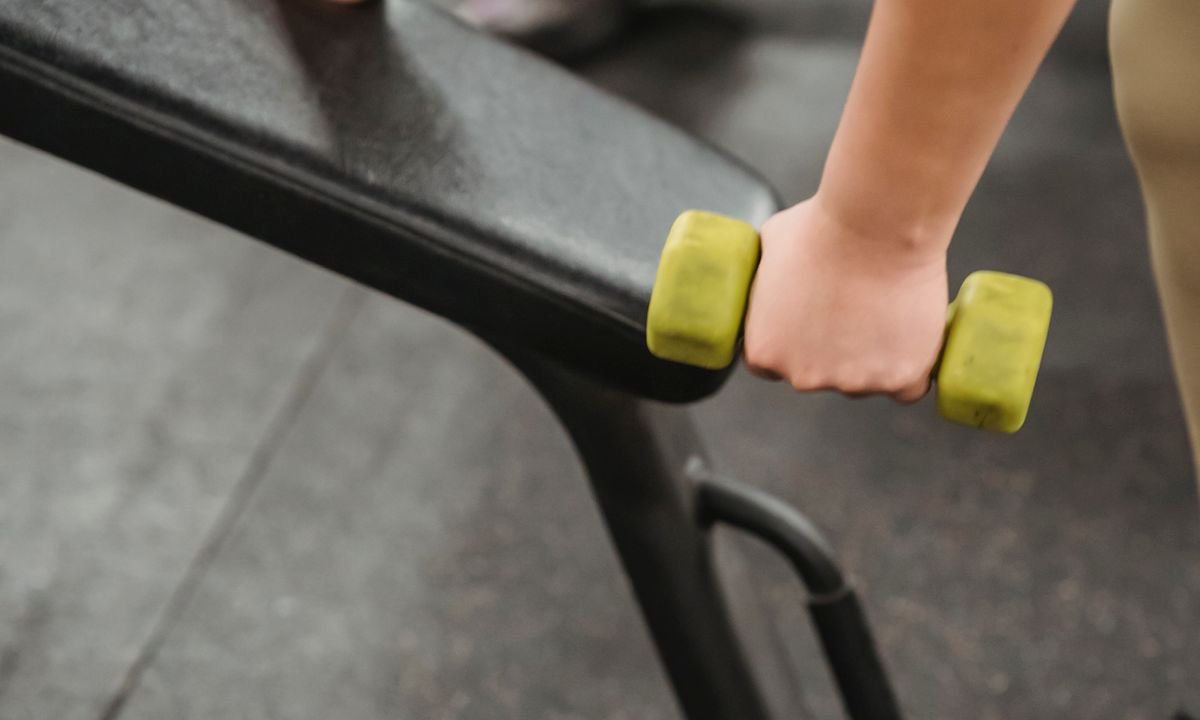
You can get a useful full-body strength session at home with one or two pairs of dumbbells and a clear patch of floor. Try the five exercises below for 2–3 rounds, resting as needed and choosing a weight that lets you move with control. This is a practical example for generally healthy adults—not an individualized program—and you can scale it to your experience and equipment.
The home dumbbell workout
Do the exercises in order. For one-sided movements, complete the listed repetitions on each side. Rest about 60–120 seconds between sets, or longer if you need it to keep good form. The set and repetition ranges below are practical starting points; the CDC suggests 8–12 repetitions per strengthening activity and 1–3 sets for adults. (cdc.gov)
| Exercise | Sets × reps | Quick setup cue |
|---|---|---|
| Goblet squat | 2–3 × 8–12 | Hold one dumbbell at your chest; sit between your hips, then stand. |
| Dumbbell Romanian deadlift | 2–3 × 8–12 | Hold weights by your thighs; push hips back with a soft knee bend, then stand tall. |
| Floor press | 2–3 × 8–12 | Lie on your back, knees bent; press dumbbells over your chest and lower until upper arms touch the floor. |
| One-arm row | 2–3 × 8–12 per side | Brace one hand on a sturdy chair or thigh; pull the weight toward your hip without twisting. |
| Standing overhead press | 2 × 8–12 | Start weights at shoulder height; press overhead only through a comfortable range. |
Use a load that makes the final repetitions challenging while you can still complete them smoothly. If you cannot reach the lower end of the range with control, use lighter dumbbells or do fewer reps. If 12 reps feel easy, first try more repetitions, a slower lowering phase or an additional set; increase weight when available and when your form remains steady. Stop if you feel sharp pain, and choose a comfortable range of motion.
Make it fit your week
For a straightforward routine, do this session twice a week on nonconsecutive days, leaving time to recover between sessions. The CDC recommends adults do muscle-strengthening activity at least 2 days a week, working the major muscle groups. It also recommends 150 minutes of moderate-intensity aerobic activity weekly (or an equivalent amount of vigorous activity); dumbbell strength work is only one part of that broader target. (cdc.gov)
If you’re new to lifting, start with one set per exercise and practice the movements before adding rounds or load. If you have a health condition, injury, or uncertainty about whether an exercise suits you, seek advice from a qualified health professional. For accountability, you could invite a friend—or use Actively to find nearby workout partners and active friends through mutual matching and chat.
This is an example workout, not a claim that dumbbells replace every gym exercise or piece of equipment. The advantage is convenience and a simple way to train several major muscle groups at home; the limitation is that your available weights and setup may restrict how you progress or which movements feel comfortable.
Sources & further reading
- What Counts as Physical Activity for Adults | CDCChecked October 24, 2026
- Adult Activity: An Overview | CDCChecked October 24, 2026
Prepared with AI assistance by Actively Editorial. Read our sourcing and corrections policy. General educational information; individual needs vary.