Training together / 3 min read
How to Make a Workout-Partner Plan That Actually Happens
Turn a good intention into a repeatable appointment: pick one activity, agree on a realistic time and place, set a simple cancellation rule, and decide how you’ll restart if one session gets missed.
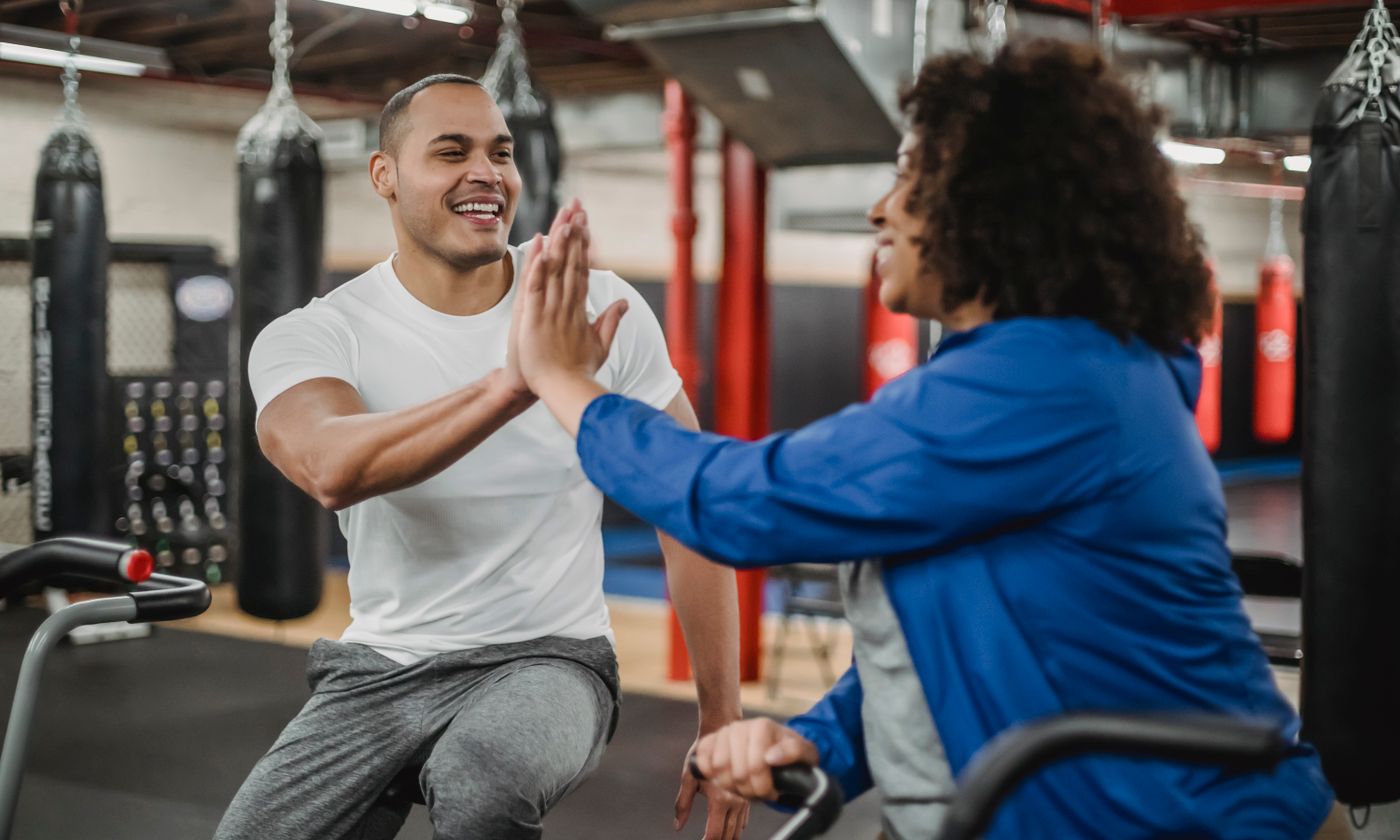
A workout-partner plan is more likely to happen when it’s specific, easy to repeat, and flexible enough for real life. Choose one activity you both enjoy, schedule a short first session, and agree on the details before you part: where to meet, what time, how long, and what to do if someone can’t make it. Treat the first plan as a trial—not a test of willpower.
Agree on a plan you can picture
Avoid “We should work out sometime.” Pick a day, start time, meeting point, and activity. For example: “Saturday at 9 a.m., meet at the park entrance for a 30-minute brisk walk.” If you’re planning a gym workout, name the gym and decide whether you’ll meet at the entrance or inside.
Start with a session that fits both schedules and comfort levels. A walk, beginner-friendly class, or familiar gym routine can work; you don’t need matching goals or fitness levels. If your preferences differ, alternate who chooses the activity each week.
Example: “Let’s try a 30-minute walk every Saturday at 9 a.m. for the next three weeks. If it rains, we’ll meet at the community gym for an easy treadmill walk.”
Make recurring sessions easier to keep
Set the next few sessions before the first one ends. A recurring calendar invite can reduce back-and-forth, while a brief confirmation the day before helps catch schedule changes. Agree on a reasonable cancellation rule, too: send a message as soon as plans change, and offer a specific replacement time rather than leaving “another day” open-ended.
Build in a low-pressure backup. If one partner can’t attend, the other can still do the planned activity solo—or you can move the session once that week. Decide this together so a cancellation doesn’t automatically become a skipped week.
Research offers a reason to try planned companionship, but not a guarantee: in one eight-week intervention study, exercising with a new sports companion helped maintain received social support, while both intervention and control groups increased exercise overall. The study was limited to its participants and timeframe, so treat that finding as context—not proof that every buddy arrangement will stick. Study abstract
Match the plan to your week
A partner session can be one piece of an activity routine, not the whole program. As a general target, U.S. adults are advised to get at least 150 minutes of moderate-intensity aerobic activity each week and muscle-strengthening activity on at least two days; the schedule can be spread across the week. CDC adult activity guidance
If you still need to find someone whose activity interests and availability overlap with yours, Actively is a platonic app for adults to find nearby workout partners and active friends through interests, mutual matching, and chat. Once you connect, use chat to agree on the first specific session; the app is for finding and connecting, not coaching or workout logging.
After two or three weeks, check in: Is the time working? Is the activity enjoyable? Keep the parts that make showing up easier, and change the rest together.
Sources & further reading
- Effects of a new sports companion on received social support and physical exercise: an intervention studyChecked October 24, 2026
- CDC: Adult Activity — An OverviewChecked October 24, 2026
Prepared with AI assistance by Actively Editorial. Read our sourcing and corrections policy. General educational information; individual needs vary.