Quick answers / 3 min read
How Do You Choose a Starting Weight for a New Exercise?
Start lighter than you think you need, then test the load with controlled repetitions. Choose a weight that lets you practice the movement and finish your planned set with a little effort left—not one that forces you…
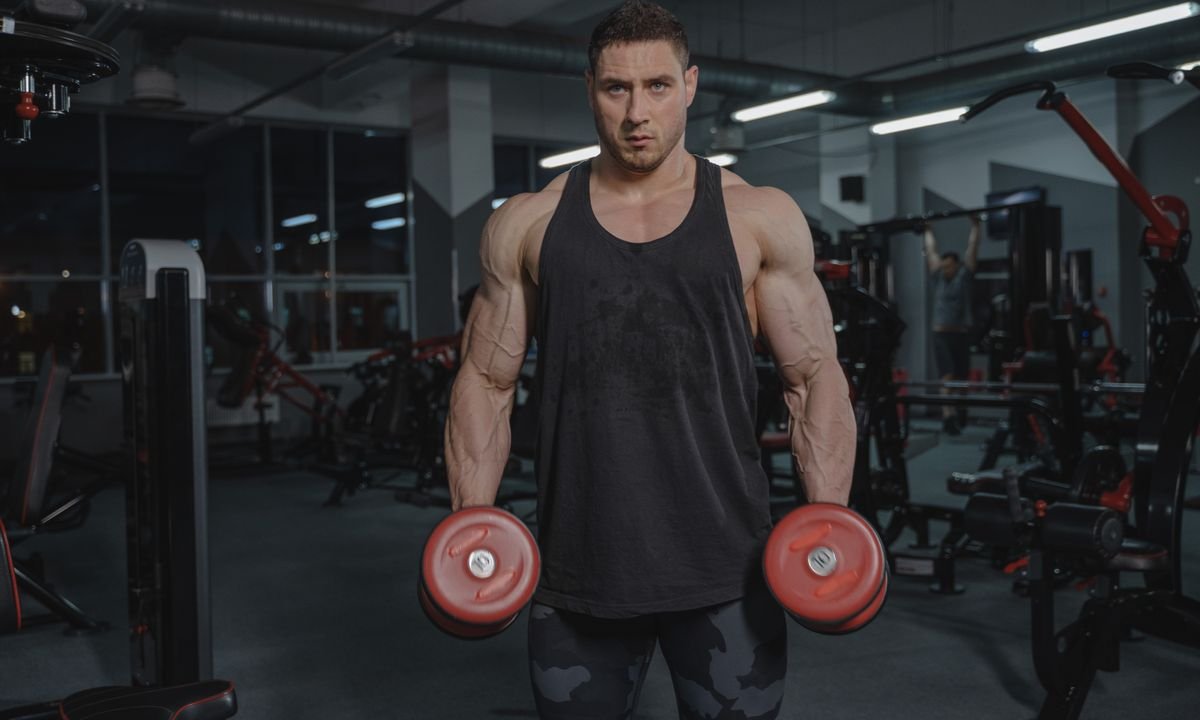
For a new exercise, begin with a very light weight—or just your body weight—and do a few practice repetitions. Add a small amount, then try your planned set. Keep the load if every rep feels controlled and you could do a few more; reduce it if you shorten the movement, lose control, or have to strain. This trial-and-adjust approach is a practical starting point, not a precise formula or a test of your maximum.
Use a short test set, not a guess
For a new machine exercise such as the leg press, set the machine to a light load and perform 8–10 smooth repetitions. Pause, adjust the weight, and try again. For dumbbell exercises, start with the lightest practical pair. The numbers on different machines—and the same exercise on different machines—aren’t directly interchangeable, so judge the movement rather than comparing loads with someone else.
As a practical suggestion, aim to finish the test set feeling that you could complete about 2–4 more good repetitions. That gives you room to learn the exercise without turning the first session into a maximum-effort attempt. Research on self-selected resistance loads finds that people can choose loads capable of supporting muscle growth when sets are taken close to failure, but that does not make guessing a suitable starting load foolproof—especially when you’re still learning the movement. (pubmed.ncbi.nlm.nih.gov)
Let technique decide whether the weight fits
A suitable starting weight allows you to use the range of motion you can control, keep a steady pace, and repeat the same basic position from rep to rep. For example, if you’re learning a dumbbell row, a load that makes you twist your torso or jerk the dumbbell is too heavy for practice, even if you can move it. Try a lighter dumbbell and build from there.
Use the same rule for machines, cables, bands, and body-weight variations: make the exercise easier if you can’t control it, and harder only when the current version feels manageable. A lighter band, higher push-up surface, or shorter range of motion can be a useful starting modification. If you feel sharp pain, stop rather than trying to push through it; seek qualified guidance if you’re unsure how to adjust the exercise.
Example: finding a first dumbbell press weight
Suppose you plan to do 8 repetitions of a new seated dumbbell shoulder press. Start with a light pair and do 5 practice reps. If those feel smooth, try your planned 8. If the last reps stay controlled and you feel you could do a few more, keep that weight for your first working set. If you have to arch your back or can’t lower the dumbbells steadily, go lighter. If 8 reps feel effortless, try the next small increase and reassess.
Write down the weight and repetitions if you want to compare next time. If you’d prefer company while learning an exercise, Actively helps adults find nearby workout partners and active friends; it isn’t a coaching or workout-logging service.
Recheck the load as you learn
Your first choice is a starting point, not a permanent assignment. Repeat the exercise with the same setup next session. When you can complete your planned repetitions with consistent control and still have more good reps available, consider a small increase. If the added load changes your form, return to the previous weight. A gradual process is more useful than forcing a number on day one.
Sources & further reading
- Are Trainees Lifting Heavy Enough? Self-Selected Loads in Resistance Exercise: A Scoping Review and Exploratory Meta-analysisChecked October 29, 2026
Prepared with AI assistance by Actively Editorial. Read our sourcing and corrections policy. General educational information; individual needs vary.