Everyday fitness / 3 min read
A First 20-Minute Stationary-Bike Session With a Friend
A simple, low-pressure plan for two adults trying a stationary bike together: adjust your seats, ride at your own pace, and use conversation—not a race—to guide the effort.
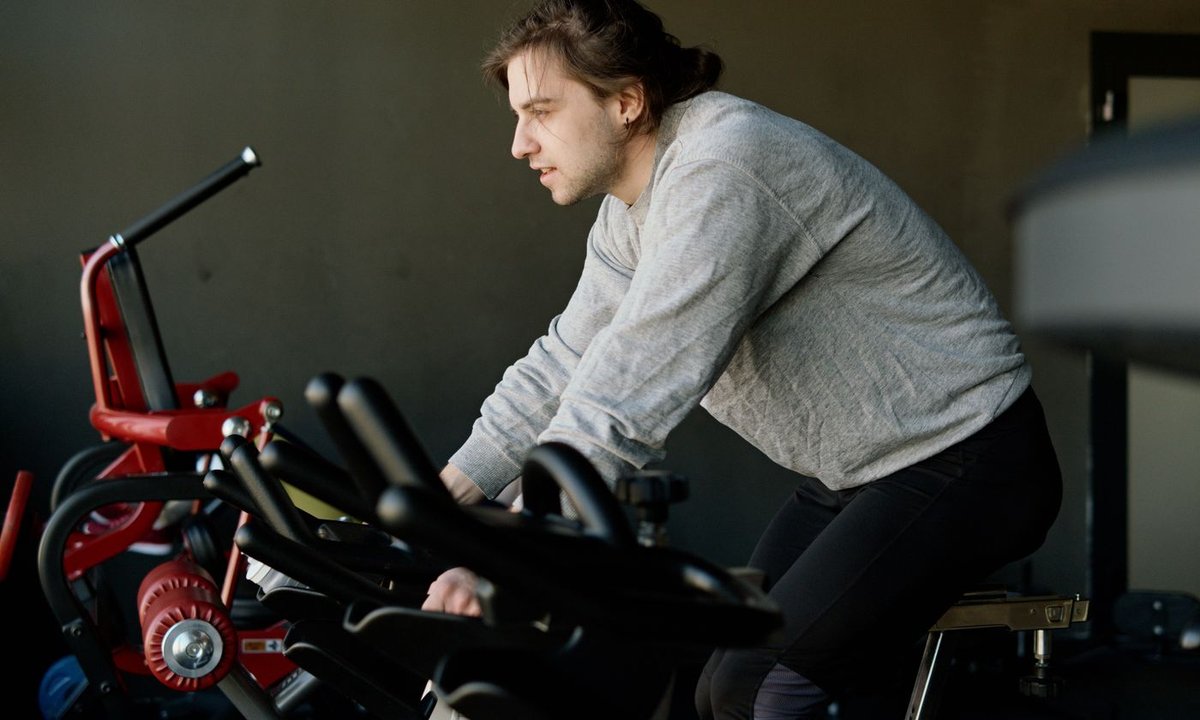
For a first 20-minute stationary-bike session with a friend, keep the goal simple: get comfortable pedaling, not prove who is fitter. Spend a few minutes setting up each bike, then ride easily, add a little effort only if it feels comfortable, and finish gently. You can follow the same clock while choosing different resistance and speeds; being together doesn’t mean matching pace.
Before you start: set up your bikes
Choose bikes that feel stable and show each person how to stop or reduce resistance. Adjust the seat so that, with a pedal at its lowest point, your knee remains slightly bent rather than locked. Set handlebars within comfortable reach, and secure loose laces or clothing. If the adjustments are unfamiliar, ask gym staff for help.
Agree on a no-pressure rule: either person can lower resistance, slow down, or stop without needing to explain. Keep water nearby, and choose a way to communicate over music or gym noise. The CDC’s talk test says moderate effort usually lets you talk, though not sing; for a first ride, begin easier than that and build only if it feels good. CDC: Measuring Physical Activity Intensity
Your first 20 minutes, step by step
This is a practical starter suggestion, not a research-tested prescription. Use the bike’s resistance controls to make small adjustments; console numbers differ between machines, so there’s no universal setting to aim for.
| Time | What to do | Check-in with each other |
|---|---|---|
| 0–4 min | Pedal easily with light resistance. | “Does the seat and pace feel okay?” |
| 4–10 min | Continue at a comfortable, steady pace. | You should be able to chat without straining. |
| 10–14 min | If both want, add a small amount of resistance or pedal a little quicker. | Either person can stay easy or skip this part. |
| 14–18 min | Return to an easy, steady pace. | Share a story, pick a song, or just ride quietly. |
| 18–20 min | Slow down and reduce resistance gradually. | Decide whether you’d enjoy another ride. |
If either person feels dizzy, unusually short of breath, or has pain, stop and take care of the immediate need rather than trying to finish the plan. If someone has a health condition or is unsure what activity is appropriate, they can seek individualized advice from a healthcare professional before starting.
Make it a shared ride, not a test
A friend who cycles regularly may naturally pedal faster. That’s fine: keep the same time blocks, but let each rider choose a comfortable pace and resistance. Try alternating who picks the music, or use the easy sections to chat. If one bike’s display shows speed or distance, treat it as that machine’s feedback—not a fair comparison between riders or bikes.
A first ride can simply help you learn whether you like the activity together. The CDC notes that adult activity can be accumulated in smaller chunks; this session is a manageable start, not a requirement to meet a weekly target all at once. CDC: Adult Activity—An Overview If you’d like to find nearby adults for activity-based plans, Actively is a platonic app for discovering workout partners and active friends through interests, mutual matching, and chat.
Sources & further reading
- How to Measure Physical Activity Intensity | CDCChecked October 24, 2026
- Adult Activity: An Overview | CDCChecked October 24, 2026
Prepared with AI assistance by Actively Editorial. Read our sourcing and corrections policy. General educational information; individual needs vary.